




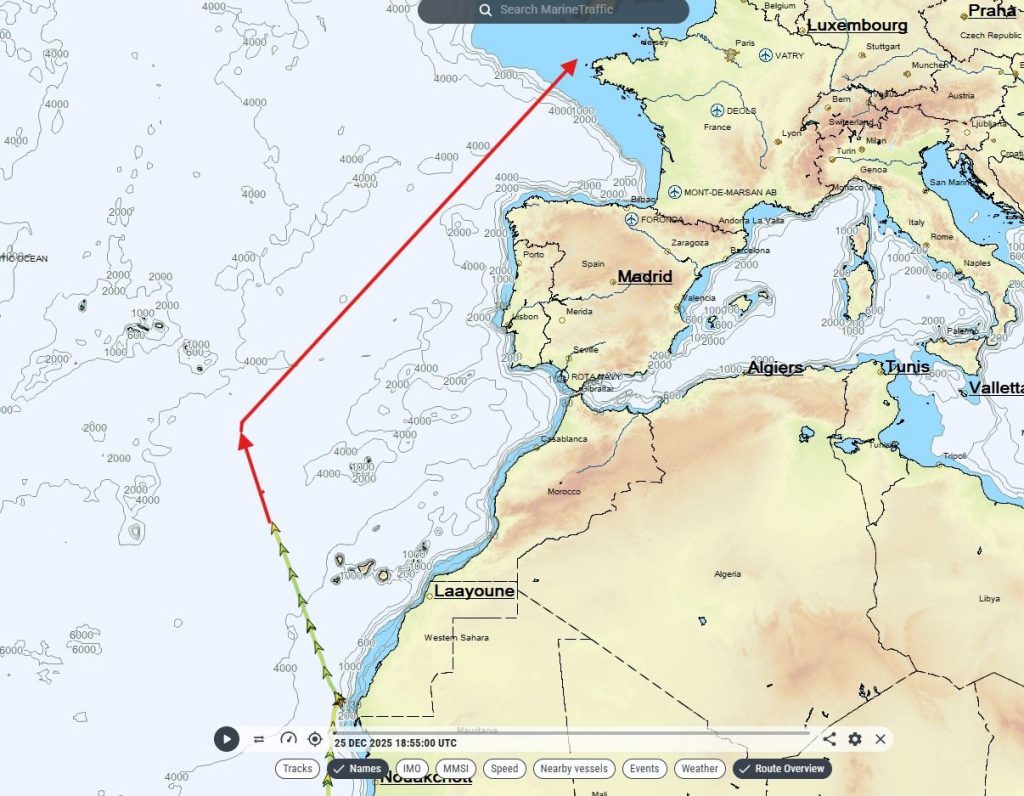
Navigating today is no longer just a matter of engines, but of strategy. The ships currently floating south of our coasts waiting for an improvement that does not arrive are exemplifying that, at sea, time is much more than money: it is safety for the crew and the cargo. It is not just a bad spell of wind; it is a paradigm shift in maritime transport. While the bunker in the Mediterranean runs out, the North Atlantic has become an ‘relentless’ environment since mid-January. According to expert Master Mariner Xing Youqing, a succession of extratropical cyclones is blocking the passage north, forcing shipping companies to choose between extreme caution or strategic audacity in Canary waters.
Conversely, the captains who have aggressively diverted westward have managed to find critical ‘transit windows’ (such as the one forecast for January 26 and 27). These ships will reach the Channel on the 29th, avoiding the downtime that burdens their competition. The conclusion among industry experts is clear: in a climate change scenario where weather patterns are increasingly severe, routing technological tools are not enough. The experience of veterans is required to interpret when the Canary Islands should be a waiting port and when they should be the starting point for a flanking maneuver in the open ocean.
The Bay of Biscay Wall and the Refuge of the Channel
Since January 19, the consecutive storms battering the Bay of Biscay have reduced navigation windows to their minimum. The effect on the sector is visible: dozens of ships are currently ‘trapped’ in the English Channel, Brixham, or the Seine Bay, waiting for days, even weeks, for the sea to give respite. However, the real dilemma for captains is occurring much earlier, south of our archipelago.
Canarias: Refuge or Time Trap?
Xing Youqing’s analysis reveals that, in light of the closure of the passage to the European Union, shipping companies are following two opposing strategies that mark the difference in their financial results: Many ships have opted for the ‘wait and see’ strategy, diverting south of the Canaries to avoid direct impact. The outcome, due to the persistence of the fronts, is being devastating: delays of at least 7 days threaten to trigger a domino effect in European and Asian ports.
News written by Pedro Marrero. Edited and verified by Gara Vega. Information cross-checked without institutional filters. This analysis has not been funded by official advertising nor conditioned by lobby interests.







