An analysis of port traffic in Las Palmas between 2010 and 2024 reveals a structural transformation in the economic role of the island chain. The consolidated historical series from the Las Palmas Port Authority confirms that the port basin has shifted from a model focused on domestic commercial supplies toward a heavy logistics platform geared toward international energy transit and the handling of major industrial flows. In 2024, total traffic reached 34.65 million tonnes. Although this represented a year-on-year decline of 7.7% from the peak of 37.56 million tonnes recorded in 2023, it amounted to a 288% increase compared with the 8.92 million tonnes registered at the 2010 operating baseline.
Fuel as the Pivot of the Operating Balance
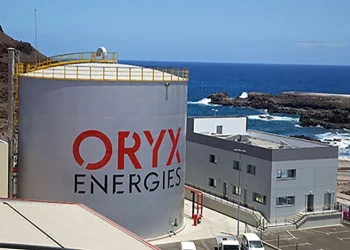
The performance of the energy commodities group was the decisive factor in this reorganization. The port’s terminals handled 12.21 million tonnes of hydrocarbons and derivatives in 2024, up 27.4% from the 9.59 million tonnes reported in 2023. The progression of this category reflects the port’s strategic repositioning in the naval bunkering and fuel-storage market along the western Atlantic route. The volume processed in 2024 was equivalent to 2.7 times the 2010 figure of 4.55 million tonnes and comfortably exceeded the pre-pandemic threshold recorded in 2019, which stood at 7.87 million tonnes.
Construction and Steelmaking Absorb Heavy Investment
Demand linked to public works and island infrastructure recorded its sharpest increase in the past 14 years in 2024. The construction materials group reached 3.74 million tonnes, compared with 1.26 million tonnes in the previous year, representing a 195.7% year-on-year acceleration. The figure comfortably doubled the previous peak of the recent cycle, set at 1.67 million tonnes in 2021, and contrasted with the averages of the preceding decade, when the sector fluctuated at around 800,000 tonnes a year.
At the same time, the heavy industry linked to ship repair and marine logistics consolidated its upward trend. Steel and metal products traffic rose to 1.88 million tonnes in 2024, 56.8% more than the 1.20 million tonnes recorded in 2023. The performance of this category confirms the segment’s sustained recovery after the standstill in 2020, when it handled 680,327 tonnes, and triples the 2010 volume of 534,620 tonnes.
Scale Adjustment in Agrifood Demand
At the opposite end of the spectrum, the primary-import segment adjusted its volume after the post-pandemic highs. The agricultural, livestock and food group recorded 9.11 million tonnes in 2024, reducing its volume by 30% from the record 13.01 million tonnes reached in 2023. Despite the year-on-year retreat, the current level of food-related traffic more than doubled the 2010 figure of 2.82 million tonnes and stood well above the average for the 2015–2019 five-year period, which averaged 6.2 million tonnes a year.
Contraction in Chemical Inputs and Secondary Minerals
Categories associated with direct industrial processing and agricultural inputs underwent marked quantitative corrections over the past year. Chemical products fell from 1.50 million tonnes in 2023 to 52,093 tonnes in 2024, interrupting the high-intensity trend observed in 2021, when they reached a peak of 2.01 million tonnes. Fertilizers, meanwhile, declined to 34,060 tonnes from 202,797 tonnes the previous year, while the non-metallic minerals group fell to 67,120 tonnes from 474,067 tonnes in 2023.
Resilience of Transport Equipment in Island Traffic
The vehicles and transport equipment category maintained a relatively stable trajectory within the provincial total. In 2024, this group moved 5.62 million tonnes, representing an 11.9% decline from the 6.38 million tonnes recorded in 2023. The figure confirms that traffic has remained above the low recorded in 2020, when it stood at 3.88 million tonnes, and reflects the regularity of commercial and inter-island fleet movements. Meanwhile, the general category of other goods adjusted its volume to 1.91 million tonnes, compared with 3.92 million tonnes in 2023.
The cross-trends in the statistical series between 2010 and 2024 describe a port facility whose operational balance has shifted its center of gravity. The concentration of tonnage in fuels, steelmaking and structural materials consolidates Las Palmas as a high-density industrial services hub, exposed to global energy flows and to infrastructure investment cycles across the island chain.
The article “The Industrial Transformation of Las Palmas Port: A 288% Expansion in 15 Years” was first published on canarymaritime.com.