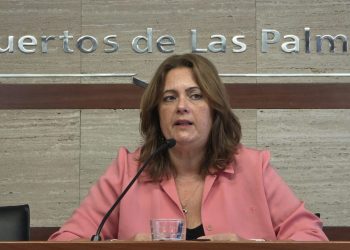
The Shipping Canary Islands 2026 conference, convened by business association Oneport on October 26 and 27, concluded its sessions by placing maritime security, technological threats and the dispute over the delimitation of maritime spaces in the central position of the geostrategic debate in the central Atlantic. The technical meeting brought together an exhaustive agenda covering geopolitical analysis, the European regulatory framework and the operation of island infrastructure amid the transformation of international trade.
Alongside the regulatory and geopolitical dimensions, the forum’s financial analysts emphasized the growing complexity of the operating environment in West Africa, a natural market for expansion and interconnection for companies based in the Canary Islands. Currency volatility, restrictions on the repatriation of capital and sovereign credit risk in the region require the adoption of rigorous financial risk-mitigation frameworks. For maritime and industrial operators providing services in the Gulf of Guinea and along the African coast, securing backed international credit lines, arranging political-risk insurance and operating under the legal and tax protection provided by the Canary Islands platform are essential factors in guaranteeing bankability and the sustainability of cross-border transactions.
Legal sovereignty and the clash with the Canary Islands
The central theme of the geopolitical presentations was the legislative initiative promoted by Rabat to unilaterally establish its Exclusive Economic Zone (EEZ) and territorial waters, effectively incorporating the waters adjacent to Western Sahara. This assertion of sovereignty clashes with the archipelago’s geographical reality: the projection of Morocco’s 200-nautical-mile zone directly overlaps with Canary Islands waters. The Moroccan authorities’ technical rejection of applying the median-line principle, invoking coastal-equity principles, creates a front of regulatory uncertainty over sovereignty along the natural routes of the central Atlantic.
Port cybersecurity, emergencies and the energy transition
At the operational level, specialists addressed the new vulnerabilities affecting marine terminals. The security section examined the cyberthreats identified by police forces in port environments and the urgent need to shield critical systems. At the same time, industry presented the deployment of artificial-intelligence solutions aimed at optimizing logistics and supporting analytical forecasting in decision-making. The sessions also set aside space for debate on developing the response to maritime emergencies in the archipelago and adapting fleets to the European Union’s regulatory pressure, marked by the inclusion of the maritime sector in the emissions trading system (EU ETS) and the provisions of the FuelEU Maritime regulation.
Strategic resources, Monte Tropic and exploration
The seabed was at the center of the analysis of the disputed area’s economic potential. Beyond the impact on traditional fishing grounds, attention is focused on hydrocarbon exploration and, above all, the proposal to extend the continental shelf to 350 nautical miles southwest of El Hierro. The Tropic seamount is located in this area, containing critical minerals such as tellurium and cobalt, which are essential to the energy transition and the manufacture of advanced technology.
The closing presentations recalled that unilateral proclamations of sovereignty have no validity under international law without the conclusion of bilateral agreements or submission to international arbitral tribunals such as The Hague. The conference’s conclusions confirm that the stability of the European Union’s southwestern flank will depend on the ability to coordinate the security of shipping routes, the cyberdefense of its ports and the shared governance of the ocean’s natural resources.
The article Shipping Canary Islands 2026 places financial security at the heart of the maritime agenda in West Africa from the Canary Islands was first published on canarymaritime.com.