A documentary promoted by Asocelpa and released on YouTube in October 2026 examines the daily operations of professionals working at Gran Canaria’s logistics hub. From berth-call management to terminal automation, companies in the sector are calling for the implementation of a Port Community System. The Port of Las Palmas brings together ship agents and stevedores in a high-intensity operational environment. The documentary Ship Agency and Stevedoring: 100 Years of Work, produced by the Association of Ship Agents and Stevedores of Las Palmas (Asocelpa), examines the inner workings of the industry to mark the employers’ association’s centenary.
The production documents the continuous work required to serve the commercial fleet in the mid-Atlantic. Preparations for each port call begin months before berthing, through the planning of technical services, administrative permits and supplies. No commercial negotiations have been conducted with the parties mentioned or featured in the video in preparing this article, in line with Canarymaritime’s commitment not to mix advertising with news.
Ship agency operations
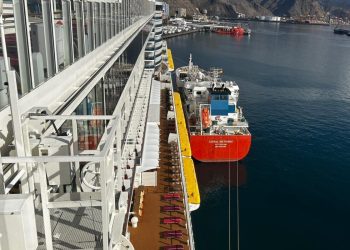
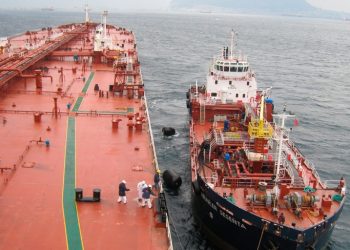
Ship agencies manage the relationship between shipowners and land-based infrastructure. Their duties include handling customs licenses, supplying provisions and coordinating fuel supplies (bunkering), a key segment of activity at the port of Las Palmas.
During technical refueling and provisioning calls, ship agents arrange crew changes. This task requires processing border passes, arranging road transfers and booking hotels for on-board personnel. Direct contact with captains is crucial to completing operations within the deadlines set by shipping companies.
The mechanization of dock work
Stevedoring companies handle the loading and unloading of cargo. Operations cover containers, roll-on/roll-off (ro-ro) cargo and heavy components for the offshore industry, including oil-platform components weighing up to 300 tonnes that require consolidation and subsequent onward shipment to Europe.
Terminal management has changed substantially in recent decades. Operations have moved from handwritten paper records to integrated computer systems that direct cranes and yard movements. This digitalization has reduced noise levels on the dock by automating the workflow through onboard terminals and telematic communications.
Filling skilled positions and delays to the ‘Port Community System’
The port industry is facing a shortage of generational replacement. The sector’s increasing use of technology requires professionals with higher levels of technical training, a factor that affects the recruitment of young workers. At the institutional level, the employers’ association has criticized delays in the administration’s digital transformation. Terminals are calling for the implementation of the Port Community System (PCS), a telematic platform designed to integrate, in real time, data from the Port Authority, Customs, ship agents and freight forwarders. The sector maintains that the absence of this tool keeps operational management locked into outdated systems. The combined activity of stevedoring and ship agency provides the basic logistics support for Gran Canaria’s commercial supply and industrial activity.
The article Asocelpa: New Video on the Inner Workings of Ship Agency and Stevedoring at the Port of Las Palmas was first published on canarymaritime.com.